Bagpipe Underground | New to Bagpipes?
You've survived the "Before You Start" articles. You know what bagpipes cost, how long they take to learn, and why you probably need a teacher. Now it's time to meet the instrument you'll actually be playing for the next several months.
It's not the bagpipes.
Say Hello to Your New Best Friend
The practice chanter is a small, quiet (when compared to the bagpipe), deceptively simple-looking instrument that every single bagpiper on the planet owns and uses. Beginners use it because it's how you learn. Experienced pipers use it because it's how you stay sharp. Competition-level players who have been piping for thirty years still sit down with the practice chanter regularly. You do not outgrow this thing. Ever.
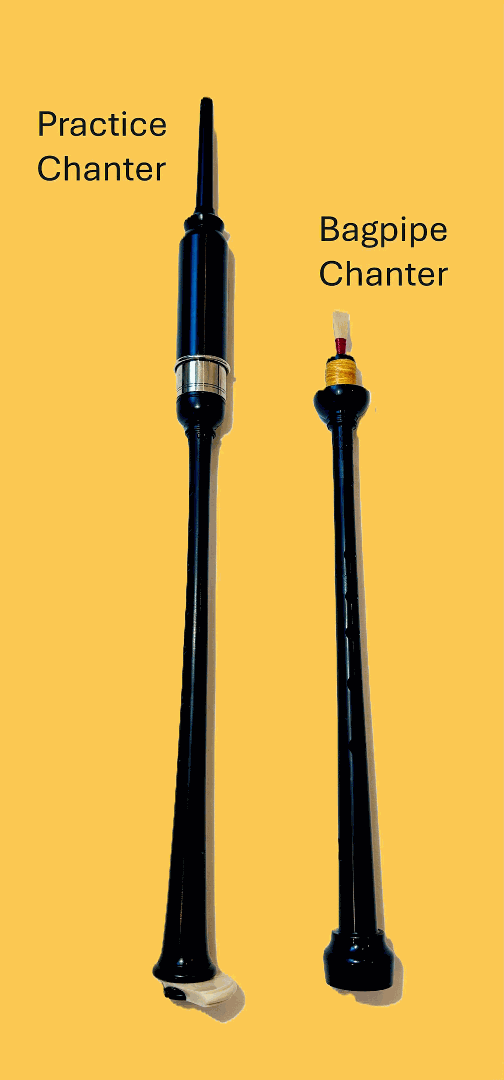
There are two photos below. In the photo on the left you will see a practice chanter and a bagpipe chanter. Note that there is a difference between the two. The practice chanter has a mouthpiece on it, the bagpipe chanter does not. There is no mouthpiece on the bagpipe chanter because it will be inserted into a full bagpipe setup later. In the photo on the right, you can see the practice chanter disassembled. Now the lower part of the practice chanter looks almost exactly like the bagpipe chanter. The only visible difference here appears to be a red plastic reed on the practice chanter versus the cane reed on the bagpipe chanter. The important point here is to recognize these are two different things. Many people will use the simple term "chanter" when speaking about either, so it will be up to you to decipher whether they are talking about the Practice Chanter or the Bagpipe Chanter.
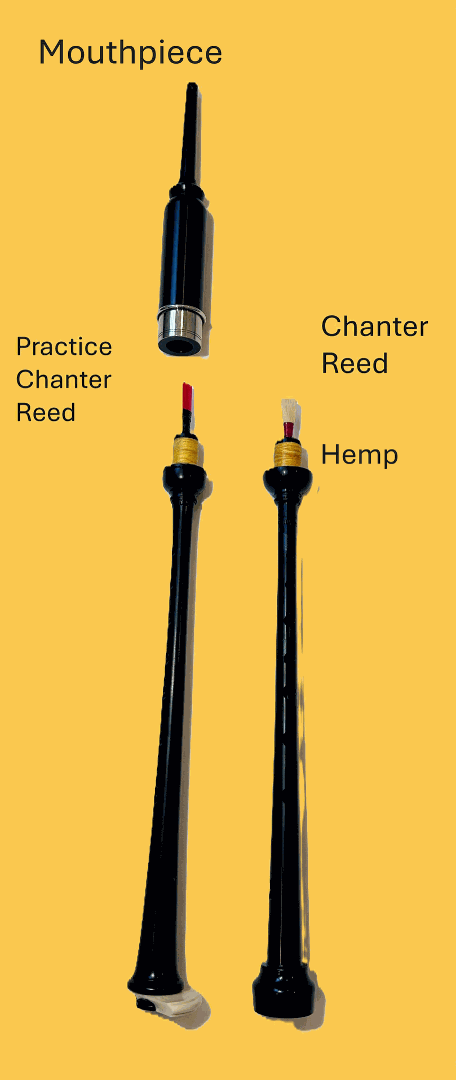
As you can see, the practice chanter separates when twisted and splits into a mouthpiece section and a lower section with holes drilled in it. Attached to the lower section is a small plastic reed. Reeds come in many different colors and emit a slightly different sound depending on the practice chanter and the reed maker, reed shape, and material used. When a reed is removed, you can see that it has a small amount of string -- usually yellow or black -- wound around its base. This string is generally known in the bagpipe world as hemp. The hemp ensures that when the reed is placed atop the lower practice chanter, it seats tightly and avoids any air leaks when blown into. Similarly, the top of the lower section is also wrapped in hemp so that it seats securely into the upper mouthpiece section and helps maintain a tight seal throughout the chanter.
When placing the two sections together or taking them apart, avoid touching the reed or brushing it against the inside of the upper mouthpiece section. Reeds can be fragile, and a damaged reed will change the sound of your practice chanter.
The bottom section of the practice chanter has 7 holes aligned down the top and one hole on the back. The holes are aligned and spaced the same on a practice chanter as on a bagpipe chanter -- this is intentional, and it's what makes the practice chanter such an effective training tool as you work toward playing the full pipes.
You hold the practice chanter in front of you, cover the holes with your fingers, blow gently into the mouthpiece, and out comes a sound. The sound is reedy and nasal and not at all what you thought it would sound like when you imagined playing the bagpipes. That's fine. You're not playing bagpipes yet. You're building the finger technique and the muscle memory that will eventually make the bagpipes work. Everything you learn on the practice chanter transfers directly to the full instrument -- same fingerings, same note positions, same embellishments.
For more on what to do with your hands once you've got the chanter in them, see How to Hold The Practice Chanter Like You Know What You're Doing.
What to Buy
Here's the good news: a quality practice chanter is one of the most affordable entry points in all of music. You're looking at roughly $60 to $100 for an instrument that will serve you well for years.
The brands that come up most often in recommendations from teachers and experienced pipers include McCallum, Gibson, Dunbar, R.G. Hardie, and Walsh. These are established instrument makers with reputations built over decades. Any of these will give you a well-tuned, well-built chanter with consistent hole spacing and a reed that actually works. You do not need to overthink this purchase. Pick one from a reputable maker, and you're set.
There are practice chanters available at any price range you want -- from several hundred dollars on into the thousands. But will a $500 practice chanter make you a better player? The answer is no. For a fun glimpse at the other end of the spectrum, watch this unboxing: "I ordered the MOST EXPENSIVE Practice Chanter on Planet Earth!". Spoiler: the person playing it still has to practice like everyone else.
A few things worth knowing before you order:
Standard vs. Long Practice Chanters. Standard practice chanters are what most beginners start on. They're a bit shorter, a bit quieter, and perfectly suited for learning fingerings and tunes. Long practice chanters are closer in size and feel to the chanter on the actual bagpipes -- the hole spacing is wider, the reed is bigger, and they're louder. Some teachers prefer students to start on a long chanter so the transition to pipes feels more natural later. Others start students on standard and move to long when the time comes. If you have a teacher, ask what they prefer. If you're on your own, a standard chanter is the safe starting choice. You won't be held back by it.
The Reed. Practice chanters use a small plastic or cane reed that sits inside the mouthpiece. Most quality chanters ship with a perfectly usable reed already installed. You do not need to go out and buy a special reed on day one. You will eventually want to experiment with different reeds as your ear develops, but that's a problem for future you. For now, what's in the box is fine.
A Note on Materials. Practice chanters come in plastic, polypenco (a dense black plastic that looks like wood), and actual wood. For a beginner, plastic or polypenco is the right call. They're durable, stable in different temperatures and humidity levels, and they don't require the kind of care that a wooden instrument does. Wooden chanters are beautiful and some players prefer the tonal quality, but they are not a beginner necessity, and they cost more for reasons that won't matter to you yet.
What to Avoid
This is the part where we save you money and frustration.
The cheap Amazon mystery chanter. You will find practice chanters on Amazon for $20 to $30, often sold as part of a "bagpipe starter kit" with a carrying case and maybe a little booklet of tunes. These are almost universally terrible. The hole spacing is often inaccurate, meaning your fingers learn the wrong positions. The reeds are unpredictable. The tuning is approximate at best. You are not saving money by buying one of these. You are buying a thing that will teach your hands the wrong habits and your ear the wrong sounds, and then you'll buy a real chanter anyway. This is one of those rare situations where the cheap option is actually more expensive in the long run. If the price looks too good to be true, it is.
The vintage chanter from the antique shop. Every so often someone finds an old practice chanter in a secondhand store or inherits one from a relative and figures they'll start learning on it. The romantic appeal is real, but old chanters can have issues -- worn holes, cracked bodies, reeds that haven't been made in decades. If you have a family chanter with sentimental value, that's wonderful. Keep it, display it, treasure it. Then buy a new one to actually learn on.
The "it's basically the same thing" instruments. A practice chanter is not a recorder. It's not a tin whistle. It's not a clarinet with fewer keys. The fingering system, the reed mechanism, and the technique are specific to bagpipes. You cannot practice bagpipe fingerings on another instrument and expect it to transfer. This comes up more often than you'd think, usually from well-meaning friends who play other woodwinds.
What Else You Might Need
Not much, honestly. The practice chanter is a refreshingly low-maintenance instrument.
A case or sleeve. Keeps it from getting knocked around in your bag. Some chanters come with one. If yours doesn't, a simple cloth sleeve does the job.
A tutor book. A good beginner method book gives you structured exercises and tunes arranged in a logical learning sequence. Your teacher will likely have a preference. If you're self-teaching, look for books by well-known piping instructors -- the BagpipeUnderground resources page has recommendations.
A notebook. Not glamorous, but useful. You're going to want to write things down -- notes from lessons, things to practice, questions that come up. The early learning phase generates a lot of "wait, what was that thing about gracenotes?" moments, and having a place to capture them helps more than you'd expect.
A metronome. You probably already have one on your phone. Rhythm matters enormously in bagpipe music, and practicing with a metronome from the beginning builds timing habits that are hard to develop later. Your eventual teacher will go deeper on this.
That's it. You don't need a music stand (though they're nice). You don't need a special chair. You don't need any maintenance tools beyond occasionally wiping down the chanter after playing. This is not an instrument that demands a lot of accessories to get started.
Where to Buy
Buy from a bagpipe specialty shop rather than a general music store or Amazon. While some quality manufacturers are beginning to sell their practice chanters on Amazon, this marketplace is currently still short on quality practice options. Shops that specialize in Highland bagpipes know what beginners need, stock the right brands, and can answer questions that a general retailer can't. Many of these shops operate online and ship internationally.
If you're getting instruction through a pipe band, ask your instructor where they recommend buying. Many bands have relationships with suppliers and can point you to the right place, sometimes at a discount.
The BagpipeUnderground resources page maintains a list of recommended retailers.
Coming up next: you've got your practice chanter. Now what do you do with your hands? Read How to Hold The Practice Chanter Like You Know What You're Doing.