Bagpipe Underground | New to Bagpipes?
Let's just acknowledge the moment you're in right now.
Something happened. Maybe it was a pipe band marching past you at a parade and you felt it before you heard it, that low, humming wall of sound that seems to bypass your ears entirely and go straight for your chest. Maybe it was a funeral, and the pipes did something to the air that nothing else could have. Maybe you tumbled down a YouTube rabbit hole at 11pm and three hours later you were still watching, completely unable to explain yourself. Maybe your grandfather played, and there's a set of pipes in a case somewhere that nobody has opened in twenty years. Or maybe you just feel the music in your bones and can't fully explain it, a pull toward something ancient, something that might even be in your ancestry. Whatever the reason, the music is doing something to you.
Whatever it was, something clicked. And now here you are, seriously considering whether you might actually do this.
You might. Let's talk about it honestly.
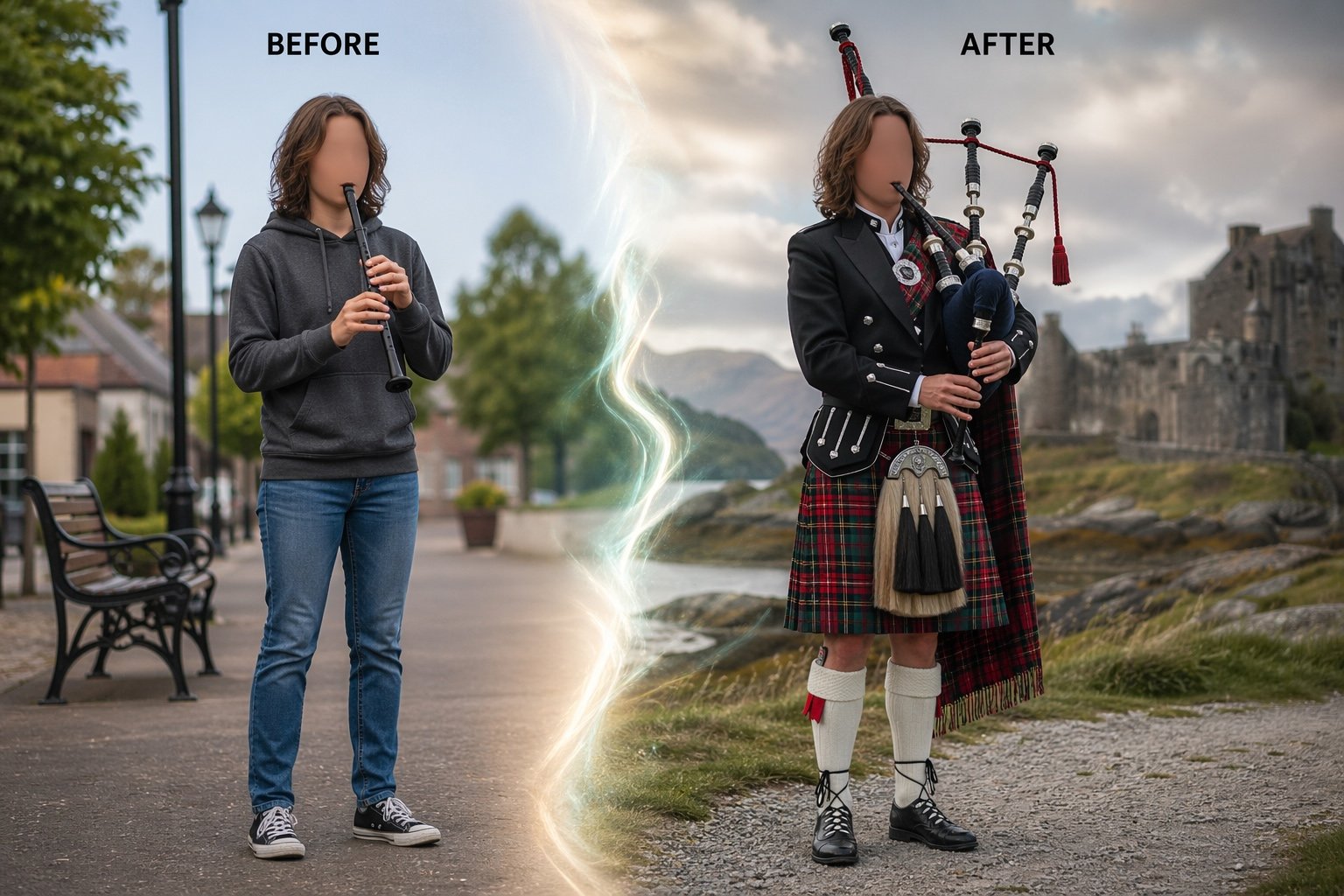
First: A Few People Are Going to Think You're Joking
When you tell people you're learning to play the bagpipes, a predictable sequence of events will unfold. They'll laugh (not meanly, just in genuine surprise). They'll make one of three jokes (the neighbors, the cats, the "is that even a real instrument"). Then they'll realize you're serious, and something interesting will happen in their face. Respect, maybe. Curiosity. A little envy.
Because here's the thing about bagpipes: nobody thinks of them as a casual hobby. When you say you play guitar or piano, people nod and move on. When you say you play bagpipes, people stop. It's specific. It's committed. It says something about you before you've played a single note.
Don't let the initial reactions put you off. There are truly far more bagpipe tunes out there than Scotland the Brave and Amazing Grace. The same people making the neighbor jokes will be the ones asking you to play at their kids' graduation in four years, or requesting you at their own funeral (yes, even before you know how to play properly). Count on it.
What You're Actually Signing Up For (The Honest Version)
Here's what nobody tells you upfront, so we'll tell you now: you are not going to play the full bagpipes for a while.
Not the real ones, anyway.
Before you ever touch a full set of pipes (the bag, the drones, the whole magnificent, impractical, glorious instrument), you're going to spend a meaningful chunk of time with something called a practice chanter. Think of it as the recorder you played in elementary school, except it actually leads somewhere. It's quiet enough to play indoors. It sounds nothing like the full pipes.
And it is, without question, the most important part of your entire journey.
The practice chanter is where you learn everything that actually matters: the fingering, the notes, the technique, the muscle memory that has to be completely automatic before the pipes will cooperate with you. Skipping it isn't an option. Nobody who plays well skipped it. The pipers you admire most? They spent a long time on a practice chanter too, and the good ones will tell you they never really stopped. Even the music you love most likely had its beginnings on a practice chanter just like the one you're about to pick up.
How long is "a meaningful chunk of time"? Honestly: months. Sometimes longer. This is not bad news. This is just the shape of the thing. Every instrument worth playing takes time. Bagpipes are no different, except they're more honest about it up front.
The Cost Reality (And Why It's Actually Good News)
Here's something that surprises a lot of people: getting started costs much less than you'd think.
A decent practice chanter will run you somewhere in the neighborhood of $60 to $100. That's your entire investment for the first phase of this journey. No full set of pipes, no expensive lessons booked before you know if you like it, no equipment gathering dust in the corner after two weeks.
You're essentially renting a seat at the table for the price of a nice dinner out.
Eventually, when you're ready and have the foundation, a full set of pipes is a more serious investment. Entry-level instruments start around $400 to $800, and high quality pipes can run considerably higher. There are also reeds, cases, maintenance, and yes, lessons if you go that route. We'll cover all of that properly in its own article.
But right now, today, the barrier to entry is a practice chanter and some genuine interest. That's it.
The Thing About Time
People often ask: how long until I can really play? We dig into that in its own honest answer, but here's the short version.
It's a fair question and it deserves a fair answer, not a sales pitch. So here it is: most people who take this seriously and practice consistently will be making recognizable music on a practice chanter within a few months. Moving to full pipes typically happens somewhere in the six-to-eighteen month range, depending on YOU, how often you're practicing, and whether you're working with a teacher.
"Playing well," the kind of playing that turns heads and gives people chills, is a longer road. But not as long as you might think. If you can play it on the practice chanter, you will eventually play it on the pipes. And the truth is, the pipers who've been playing for decades will tell you they're still learning.
If that sounds like a lot, consider this: you don't have to wait years to feel the reward. Every step of this pathway has its own version of the payoff. The first time you get all nine notes clean. The first tune you can play without looking at the sheet. The first time a stranger hears you and asks how long you've been playing. Those moments come early and often, if you let them. We know. We've been there.
You're Not Joining a Hobby. You're Joining a World.
One thing that genuinely surprises most beginners is the community.
Pipers are, as a group, remarkably generous with beginners. The culture of the instrument (rooted in apprenticeship and oral tradition, passed down in pipe bands and village halls and backyard sessions) has always been about teaching the next person. You will find people willing to help you, answer your questions, lend you a reed, recommend a teacher, or just tell you which practice chanter not to buy.
This matters more than it sounds. Learning a hard instrument alone is very different from learning it as part of something. You're not signing up for a solo project. You're joining a world that's been around for centuries and has no plans to slow down.
One Last Thing Before You Start
You don't have to be Scottish. You don't have to have a family connection to the instrument. You don't need a reason that makes historical or cultural sense to anyone else. There are plenty of 10-year-olds playing this instrument, and plenty of people who started learning in their 60s.
The only qualification for learning the bagpipes is wanting to.
You're already here. That means something clicked. Trust that.
Now. Let's get you a practice chanter.
Coming up next: before you spend a dollar on anything, let's talk about what this whole thing actually costs. Read The Real Cost of Learning Bagpipes (A Straight Answer).